
The Lab
Practical articles for consequential decisions.
The NJL Design Lab blog publishes source-backed guides, models, and operating systems for financial independence, investing, real estate, family finance, AI, and the non-money side of life.
Explore the archive
Search every published article or follow a topic.
Filters run across the complete archive. Featured series keep multi-part ideas in a deliberate reading order.

Wealth & FI
How We Built the AI Trailer: What Worked, What Broke, and What We Learned
Congratulations, AGI Is Almost Here is a fictional, satirical trailer about Walter Sterling, the Bureau of Artificial Intelligence Preparedness and Domestic Continuity, and the Robinson family preparing for…

AI & Future of Work
AGI and Financial Independence: How Families Can Prepare for Economic Disruption
AGI could create abundance, instability, or both. Here is how families can prepare their income, housing, portfolio, and emergency reserves for AI-driven economic disruption.

Family Finance
What It Really Costs to Raise a Child in the US
Part 2 of a two-part series on financial independence with children: a source-backed framework for estimating child-related costs and their effect on an FI plan.

Family Finance
Financial Independence with Children Is a Family Design Project
Part 1 of a two-part series on financial independence with children: designing a calmer family system around flexibility, intentional trade-offs, and practical money habits.

Investing
Part 3: Advanced FI Planning: Roth Conversions, RMD Suppression, and the Tax Mechanics of Retirement
An advanced FI planning guide to Roth conversions, RMD pressure, account location, healthcare costs, Social Security timing, and estate-aware drawdown decisions.
Investing
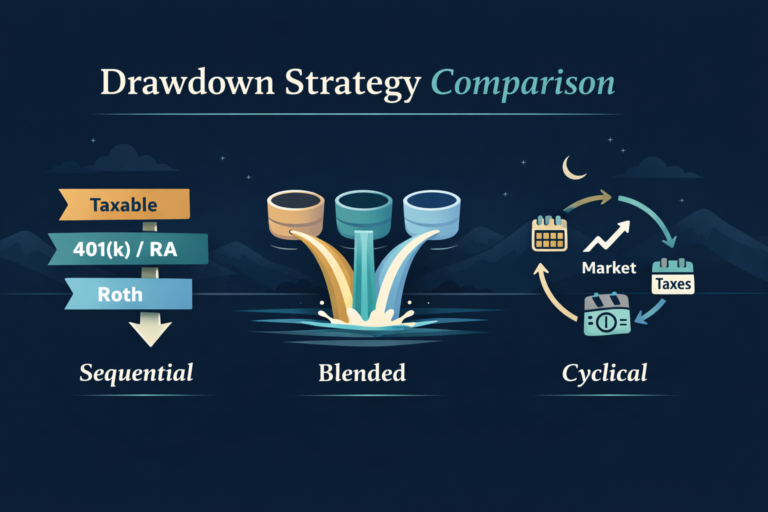
Part 2: Sequential vs. Blended vs. Cyclical: Which Drawdown Strategy Fits?
A practical comparison of sequential, blended, and dynamic retirement drawdown strategies — and how taxes, healthcare, and RMD pressure change the answer.
Investing
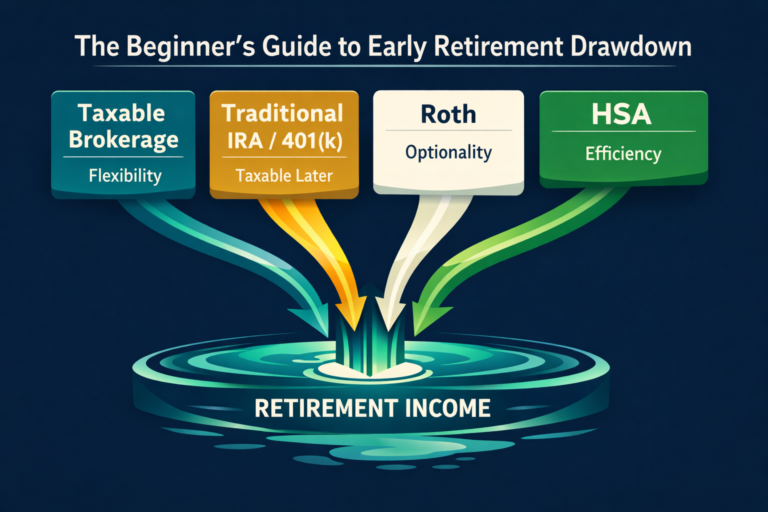
Part 1: The Beginner’s Guide to Early Retirement Drawdown
A plain-English guide to turning FI assets into retirement income: account buckets, simple withdrawal order, sequence risk, and why drawdown needs a system.
Wealth & FI
The Real Work in FI Is Not the Number. It’s the Control Loop.
Financial independence gets more durable when you stop treating FI as a static number and start treating it as a repeatable control loop that catches drift, protects optionality,…

Wealth & FI
How to Stress-Test Your FI Number Before You Trust It
Your FI number can look precise while still being unreliable. Here is how to stress-test the assumptions underneath it — spending, withdrawal, and timing — before you trust…

Life Systems
The Post-FI Reset: Identity, Routines, and Community After Work Stops Running the Calendar
Most FI conversations stop at the number. How much do you need? When can you stop? How do you know it is enough? That part matters. But it…
Investing
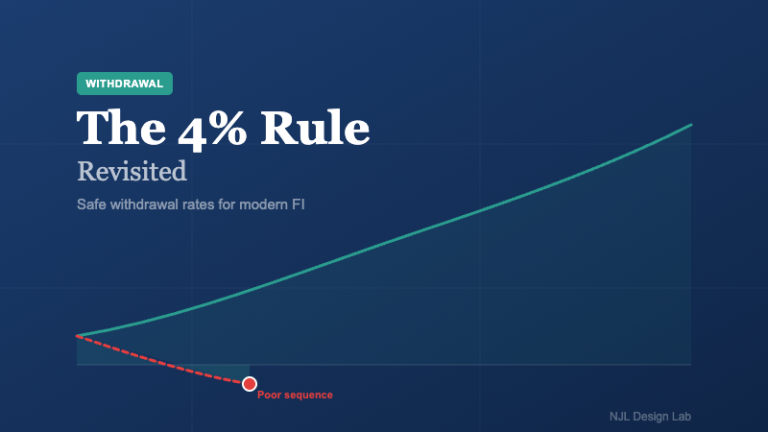
The 4% Rule Revisited: Safe Withdrawal Rates for Modern FI
The 4% rule is the most cited number in the financial independence community. It is also the most misapplied. The original research was sound. The shorthand that emerged…
Life Systems
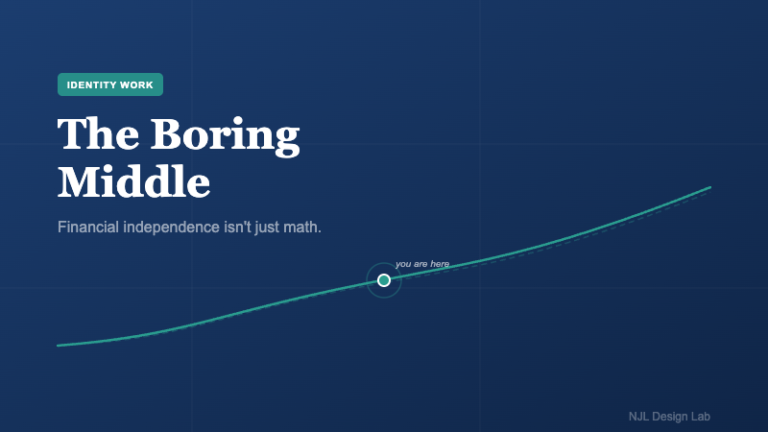
The Boring Middle of Financial Independence Isn’t Boring. It’s Identity Work.
The middle of FI is not a dead zone. It is where identity, durability, and optionality take over.